
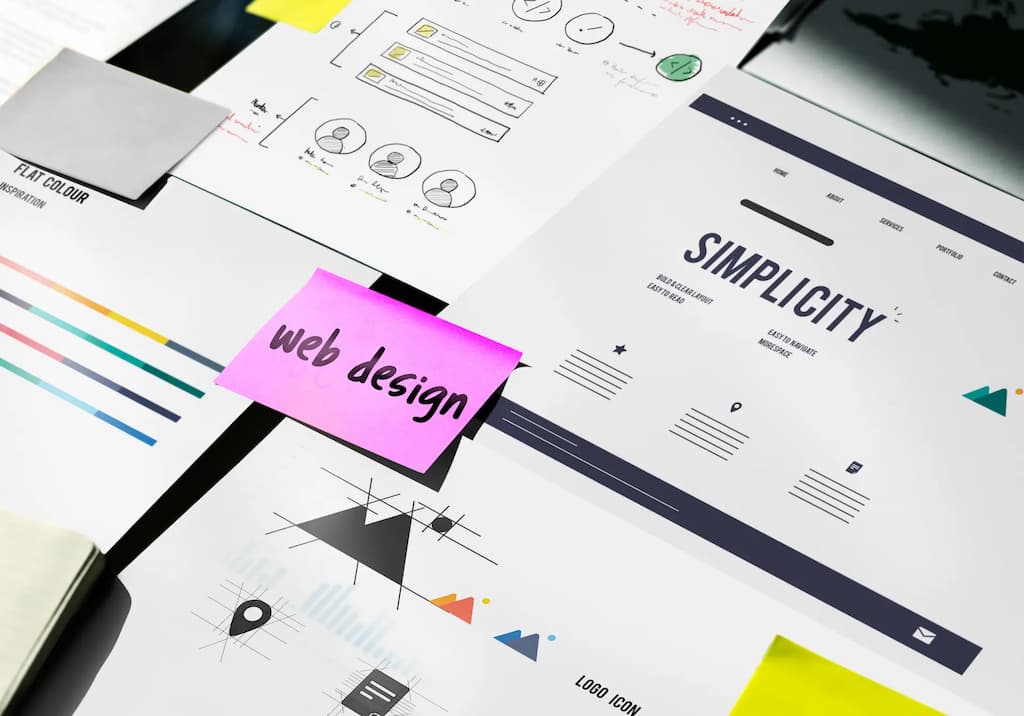
I believe the best apps and websites feel calm. They are easy to understand and easy to use. They do not ask people to think harder than needed. When something works this way, people trust it and come back to it. I see the same pattern outside of work.
Simple things often bring more satisfaction than complex setups. A walk in nature. Coffee with family. A beer with a friend. No planning. Just time spent well. That contrast reflects how I approach my work. I aim to build products that stay out of the user’s way and support what they came to do.
People use apps and websites to get things done. They are not there to admire features or structure. When the path is clear, they move forward. When it is not, they leave. Most usability problems come from overload, usually in small but repeated ways:
Simple products remove that weight. Common tasks are obvious. Actions feel natural. No instructions are needed. The products that last are often the ones people stop noticing. They fade into the background and let users focus on their goal.
Details are not the problem. Problems start when too many details demand attention at the same time. Nothing feels broken at first. The product still works, but people slow down. They hesitate. Simple actions take longer than they should. At that point, the interface becomes something users have to deal with instead of something that helps them. That is why I treat every new addition as a cost. If it does not solve a clear problem, it does not belong.
There is a commercial that compares a smart house with an old style house. The smart house looks modern and impressive, filled with systems meant to handle everything. In practice, small problems appear quickly. After a dentist visit, the house does not recognize the owner. Lights turn on in the wrong rooms. Routines fail. Simple tasks need attention.
The old style house is plain. Things work without thought. Nothing gets in the way of daily life. This difference shows up in digital products too. Some try to impress and create friction. Others stay quiet and simply work.
Simplicity does not happen by accident. It comes from choosing what to leave out. Every extra feature adds weight. In my work, I ask one question before adding anything: does this make the user’s job easier? If the answer is no, it does not belong. This approach also helps teams. Fewer features mean fewer decisions, fewer bugs, and clearer direction.
Simple products last longer. They reduce friction, build trust, and let people focus on what matters. The same rule applies outside of work. Small, simple moments are often enough. That is the philosophy behind how I work and what I try to build.